
ASTM E1610-26
 Preview
Summary
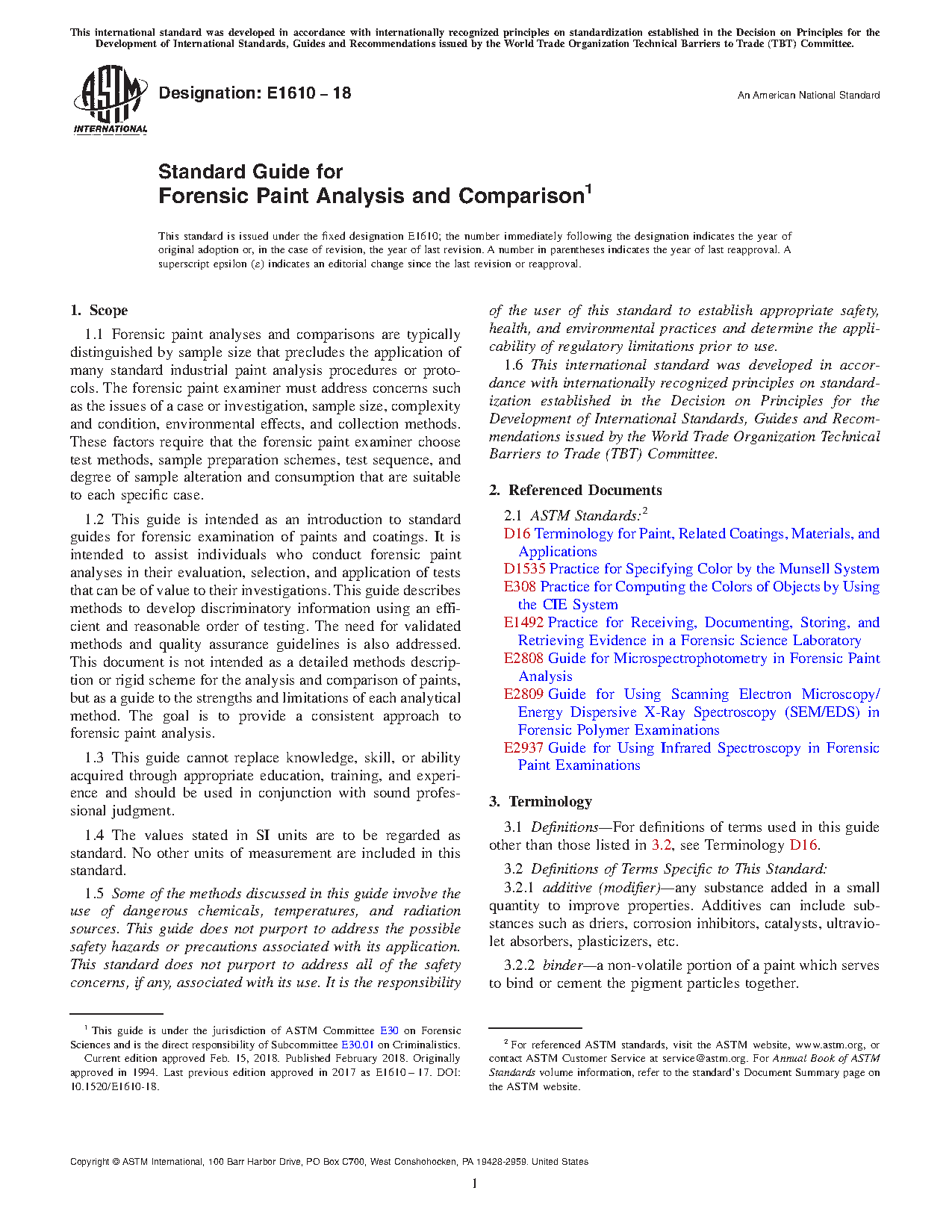
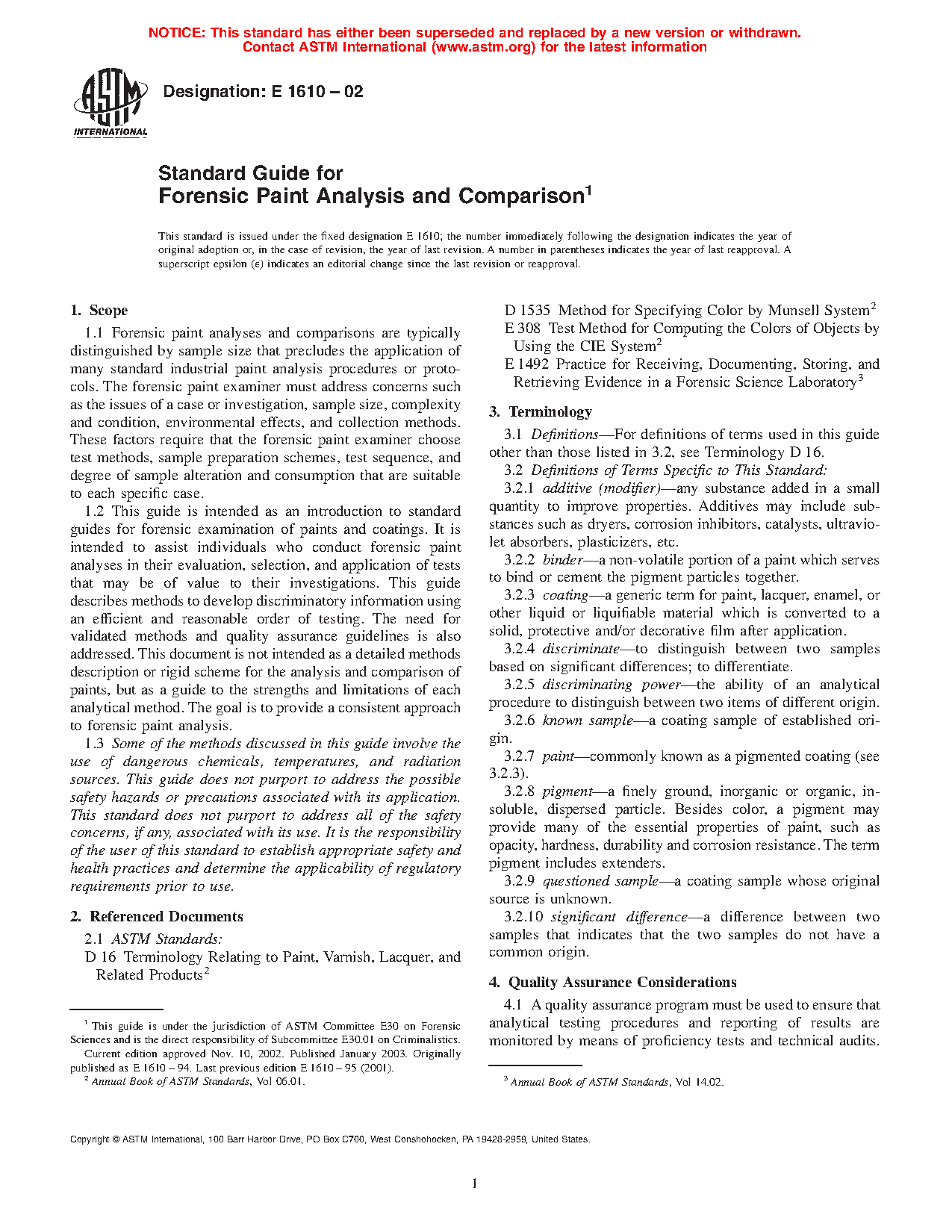
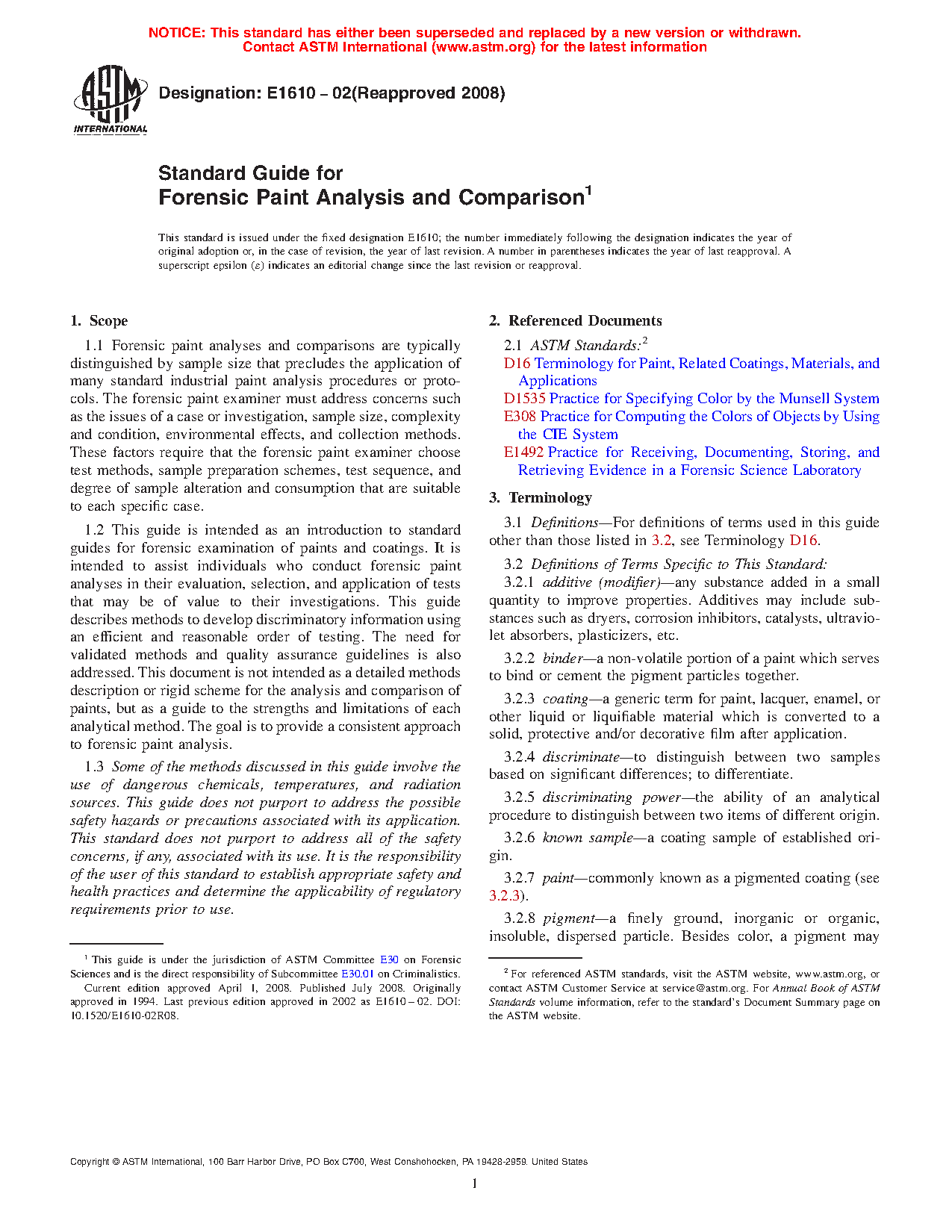
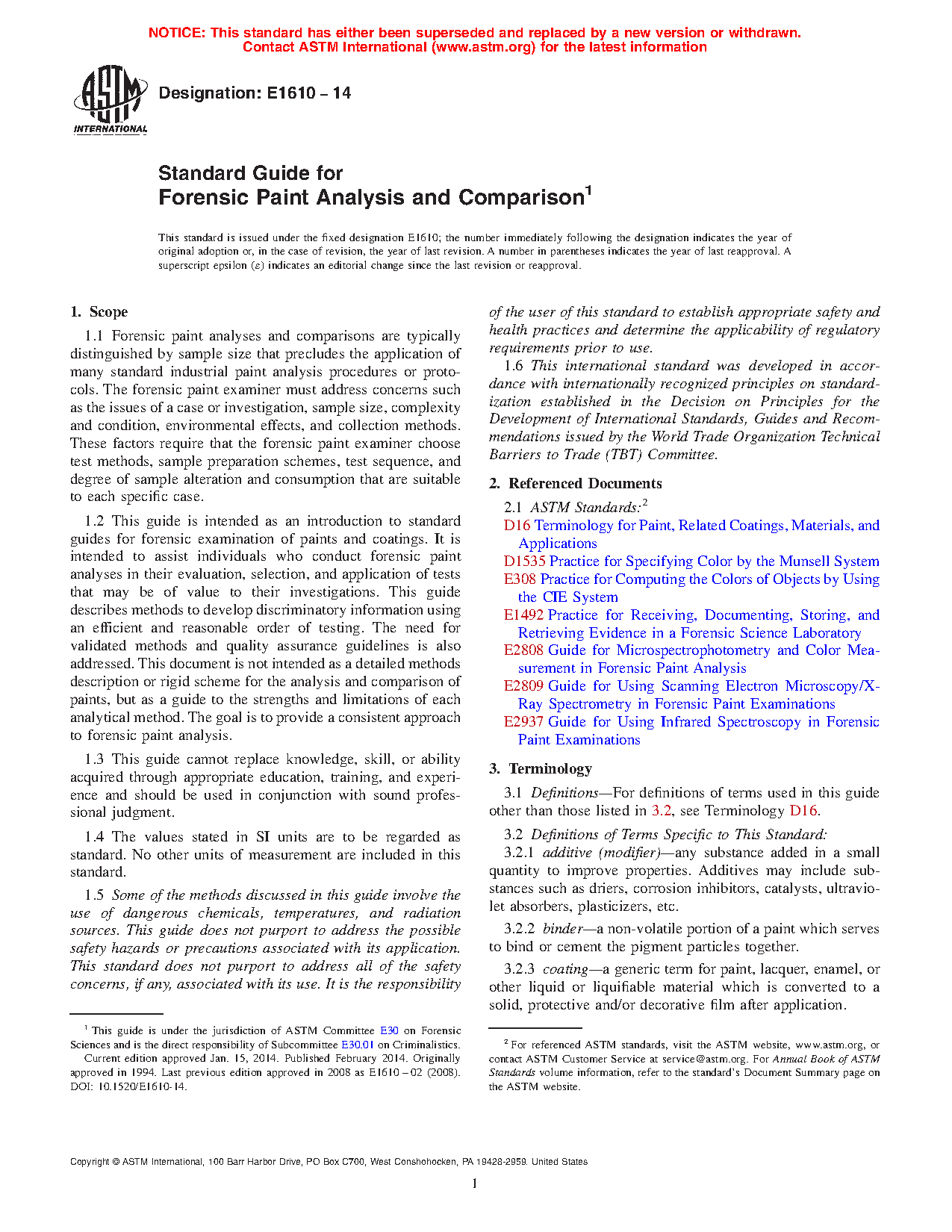
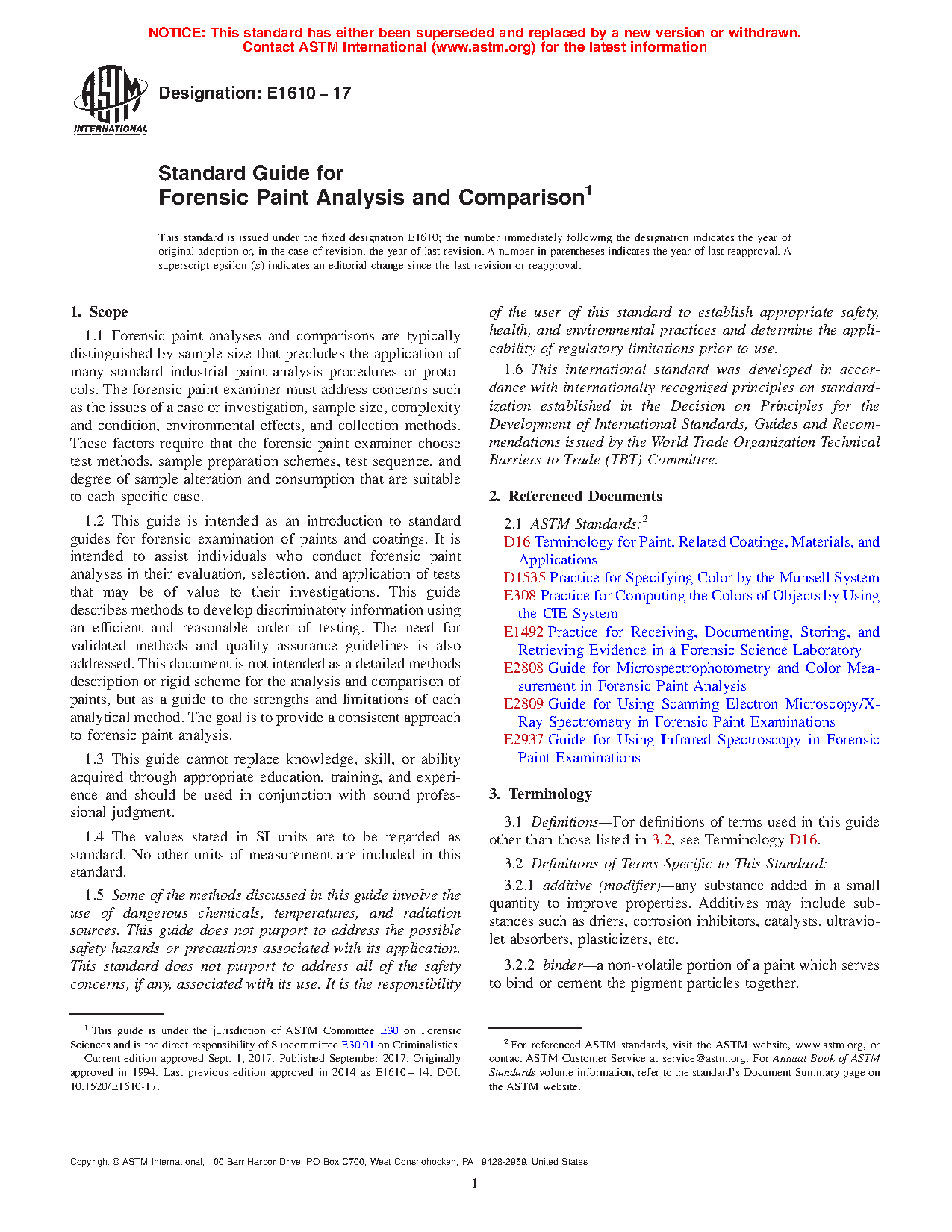
1.1 This guide covers methods to determine and compare characteristics of paints and coatings that can provide discriminatory information using an efficient and reasonable order of testing. The need for validated methods and quality assurance guidelines is also addressed. Throughout this document, the term paint is used as a shortened form of paints and coatings, however the goal is to provide a consistent approach to the forensic analysis of paints and coatings.
1.2 Forensic paint analyses and comparisons typically differ from the standard testing procedures used by the paint industry. Forensic samples are often smaller in size and may be in poor condition. The questions to be explored in the investigation, sample size, complexity and condition, environmental effects, and collection methods are all factors that require the forensic science practitioner to choose appropriate test methods, sample preparation schemes, test sequence, and degree of sample alteration and consumption that are suitable to each specific case. The significance of an association will be reported based on the combination of techniques used, as well as the observed features of the paint sample and is discussed in Guide E3462.
1.3 This guide is intended for use by competent forensic science practitioners with the requisite formal education, discipline-specific training (see Practices E2917 and E3234) and demonstrated proficiency to perform casework.
1.4 The values stated in SI units are to be regarded as standard. No other units of measurement are included in this guide.
1.5 Some of the methods discussed in this guide involve the use of hazardous chemicals, extreme temperatures, and radiation sources. This guide does not purport to address the possible safety hazards or precautions associated with its application. It is the responsibility of the user of this standard to establish appropriate safety, health, and environmental practices and determine the applicability of regulatory limitations prior to use.
1.6 This international standard was developed in accordance with internationally recognized principles on standardization established in the Decision on Principles for the Development of International Standards, Guides and Recommendations issued by the World Trade Organization Technical Barriers to Trade (TBT) Committee.
Significance and Use:
6.1 This guide is designed to assist in the selection and organization of an analytical scheme for evaluating paints and coatings. The size and condition of the sample(s) will influence the selected analytical scheme. The evaluation and interpretation of the data for each technique is an important part of the analytical scheme but it is outside the scope of this guide; data interpretation is addressed in other standards (refer to Guides E2808, E2809, E2937, E3295, and E3296).
Technical characteristics
| Publisher | American Society for Testing and Materials (ASTM International) |
| Publication Date | 04/15/2026 |
| Collection | |
| Page Count | 12 |
| Themes | Paints and varnishes |
| EAN | --- |
| ISBN | --- |
| Weight (in grams) | --- |
Replaces
Previous versions
Collections list