
AIAG's Core Tools: the manuals designed to meet IATF's requirements
The AIAG Core Tools are key industry standards designed for the automotive sector. They define the methods and best practices for developing, industrializing, and manufacturing parts that meet the requirements of OEMs and suppliers. Mastering these tools is an essential requirement for companies that are already certified or are seeking compliance with the IATF 16949 standard.
The following page provides a guide to the official AIAG Core Tools manuals, which are used worldwide by professionals in quality, process engineering, production, and product development.
The different Core Tools by AIAG
APQP
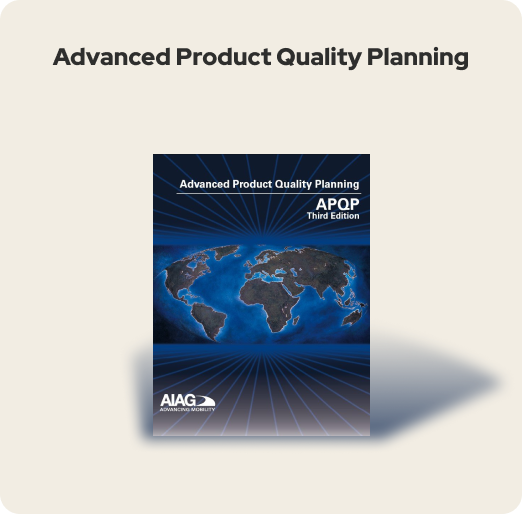
This third edition of the APQP manual focuses on optimizing new product launches. It incorporates updates reflecting agile product management practices, as well as new sections dedicated to sourcing, change management, APQP program metrics, risk assessment, and associated mitigation plans.
CP

The CP explains and maps out the links to APQP processes in greater detail and provides in-depth guidelines on developing control plans, as well as industry best practices for their effective use. Notable updates include the introduction of a "Safe Launch" requirement within the control plan phases.
PPAP
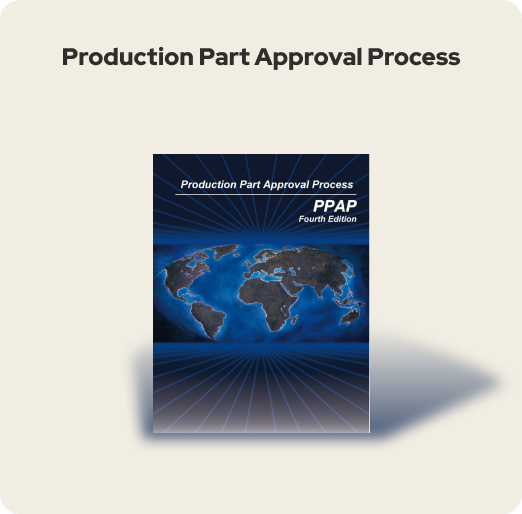
Designed to make sure suppliers understand the processes required to produce parts of consistent quality during actual production runs at industrial rates, PPAP is the industry standard for defining the production part approval process, thereby ensuring compliance with technical design documentation requirements.
FMEA

The AIAG & VDA FMEA Handbook is the new automotive industry standard for FMEA. It serves as a guide to assist suppliers in developing Design FMEA, Process FMEA, and Supplemental FMEA. The FMEA was developed by an international team of subject matter experts from automotive manufacturers and Tier 1 suppliers.
SPC
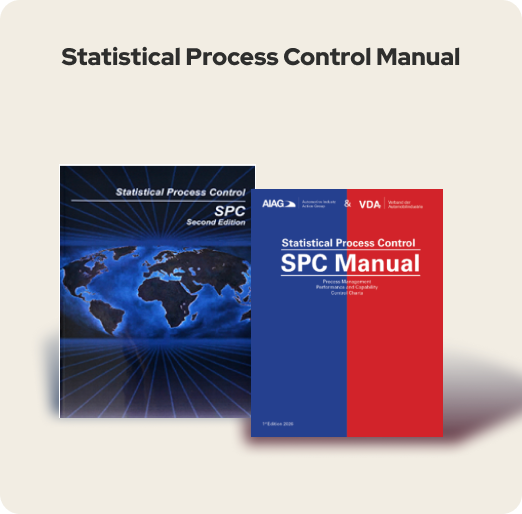
In today's economy, improvement needs to be continuous in order to thrive. The SPC offers various statistical methods, ranging from fundamental to advanced, that enhance the efficiency of your production improvement initiatives. The result: products and services that create greater value for both you and your customers.
MSA
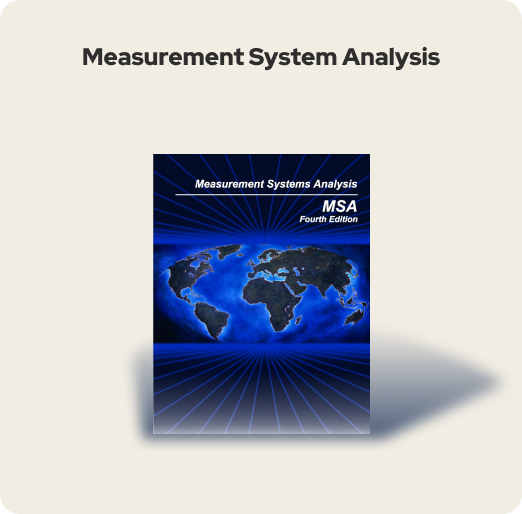
Nowadays, measurement data stands at the core of almost all manufacturing processes. Consequently, higher-quality data naturally leads to better decision-making. The MSA makes it possible to evaluate the quality of measurement systems, providing a basis for identifying areas for improvement in your processes.